Uneven or sloped ground does not necessarily prevent you from building an attractive composite deck. With the right substructure and an adjustable pedestal system, you can create a level decking surface above terrain with different elevations.
MexyTech WPC composite decking can be combined with MexyBase adjustable pedestals and a suitable joist system to provide a practical solution for terraces, gardens, balconies, rooftops, pool areas, and other outdoor projects.
Can You Install Composite Decking on Uneven Ground?
Yes. Composite decking can be installed over uneven ground, but the decking boards should not simply be laid directly onto an irregular surface.
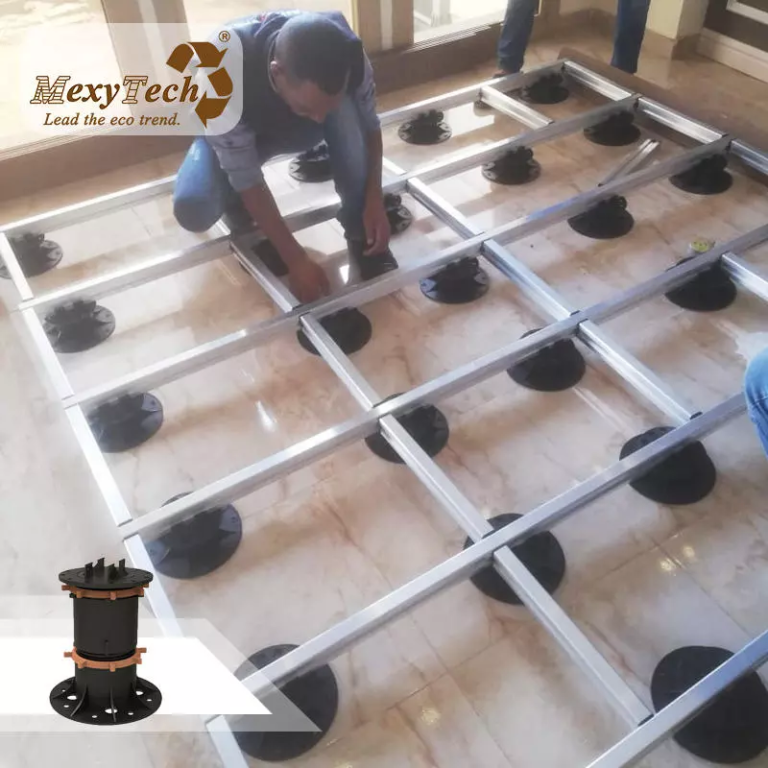
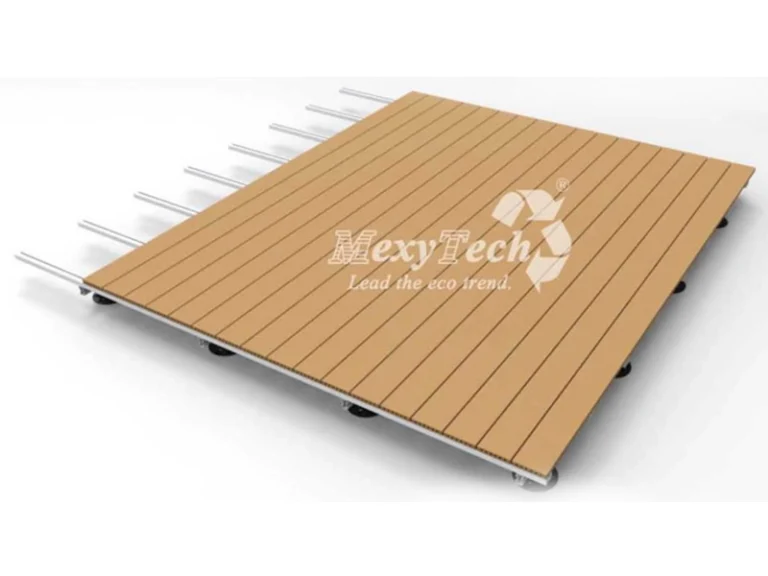
A supporting system is needed to create a stable and level base. One solution is to use adjustable pedestals beneath the joists or supporting frame.
MexyBase adjustable pedestals are available in different height configurations, with a stated adjustment range from 36mm to 607mm, allowing the support height to be adapted to different project conditions.
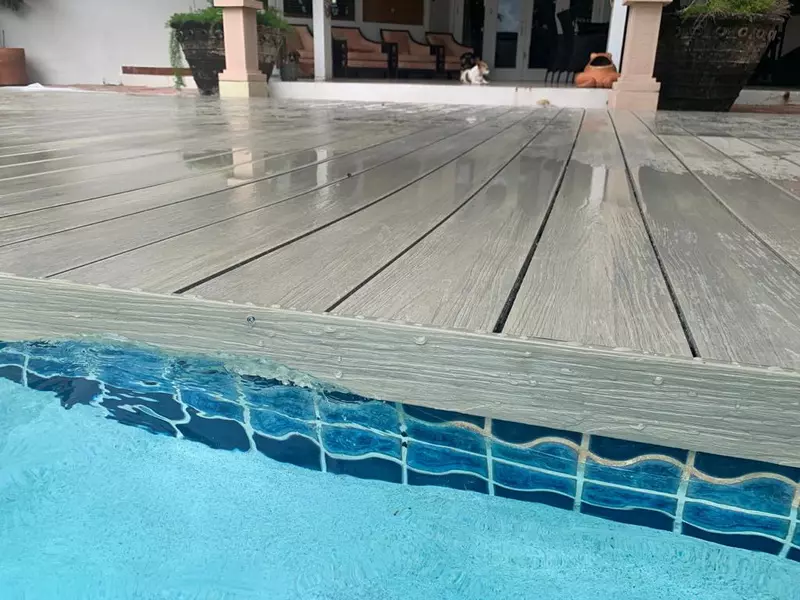
What You Need
Before installation, prepare the main materials and tools required for the project:
- MexyTech WPC composite decking
- MexyBase adjustable pedestals
- Compatible joists and clips
- Level
- Tape measure
- Saw or suitable cutting equipment
- Required fasteners
- Composite deck tiles, if applicable
The exact components will depend on the decking system and site conditions.
Step 1: Assess the Ground
Start by inspecting the installation area carefully.
Identify high and low points, slopes, drainage routes, and any significant variations in elevation. The substrate must also be capable of supporting the pedestal system and expected loads.
Proper assessment at this stage makes it easier to determine the required pedestal heights and layout.
Step 2: Plan the Deck Layout
Determine the dimensions, direction, and finished height of the deck.
Plan where the joists and adjustable pedestals will be positioned. Pedestal spacing should be based on the requirements of the decking and substructure rather than using the same spacing for every project.
Also consider board direction, perimeter details, stairs, drainage, and any obstacles before installation begins.
Step 3: Position the Adjustable Pedestals
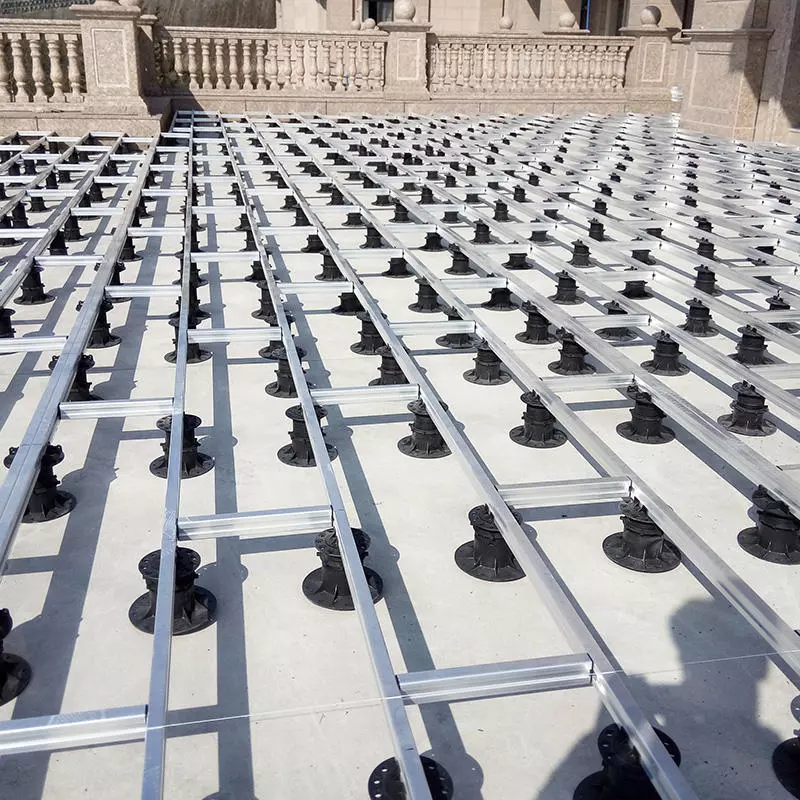
Place the MexyBase adjustable pedestals at the planned support points.
Set each pedestal to approximately the required height according to the terrain. Areas with lower ground will generally require taller supports, while higher points require shorter adjustments.
Use a level throughout the process to establish a consistent finished elevation.
Step 4: Install and Level the Joists
Position the compatible joists or supporting frame over the pedestals.
Once the frame is in place, fine-tune the pedestal heights until the complete substructure is level and properly supported.
This is one of the most important stages of installing composite decking on uneven ground. A correctly aligned substructure helps produce a stable and visually consistent finished deck.
Step 5: Cut the Composite Decking Boards
Measure the required board lengths carefully and cut the WPC decking using suitable equipment.
Pay particular attention to edges, corners, columns, walls, and other areas where precise cuts may be required.
Always follow the product’s installation recommendations when cutting or handling composite boards.
Step 6: Install the Composite Decking
Place the composite decking boards onto the prepared joist system and secure them with the specified clips or fasteners.
Maintain the recommended gaps between boards and around fixed structures. Correct spacing is important because it supports drainage and allows for normal dimensional movement of the decking.
Continue installing the boards across the entire substructure.
Step 7: Check the Deck Level
Do not wait until the entire deck is finished to check the level.
Inspect the surface regularly as installation progresses. If necessary, adjust individual pedestals to correct small differences in height.
This helps maintain a consistent finished surface across the deck.
Step 8: Finish and Inspect the Installation
After all decking boards have been installed, inspect the complete structure.
Check that the boards and clips are properly secured, the supporting frame is stable, appropriate gaps have been maintained, and water can drain effectively underneath the deck.
Complete any required edge or finishing details according to the project design.
Drainage Is Important
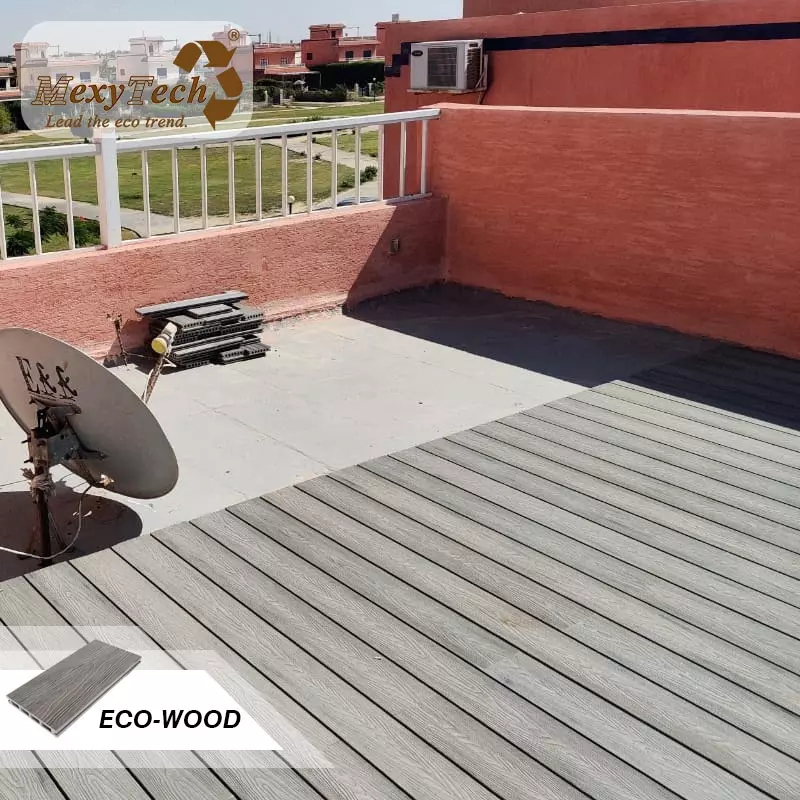
When installing composite decking over uneven ground, drainage should be considered from the beginning.
The raised structure can create space beneath the decking for water movement. However, the underlying surface still needs an appropriate drainage route so that water does not accumulate underneath the deck.
For some ground-level applications, additional substrate preparation may be required. The correct solution will depend on soil conditions, drainage requirements, and the deck design.
Build a Level Composite Deck on Uneven Ground
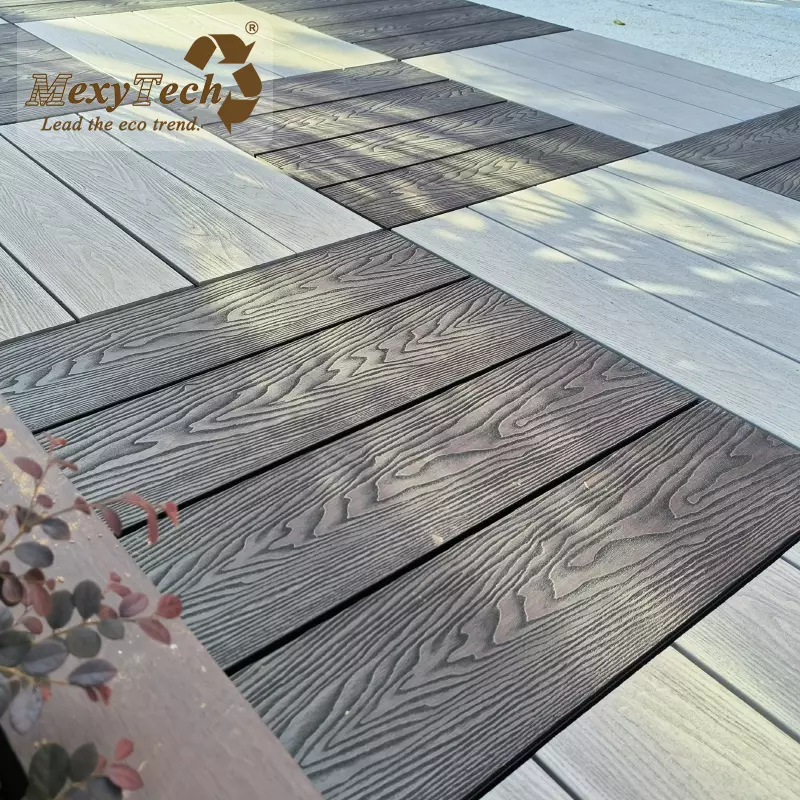
Installing composite wood decking on uneven ground becomes much easier when the deck is supported by a properly designed adjustable pedestal and joist system.
By adjusting individual pedestal heights, installers can compensate for variations in the substrate and create a level supporting structure for the WPC decking above.
MexyTech provides WPC composite decking, MexyBase adjustable pedestals, and compatible decking solutions for residential and commercial outdoor projects.
For product specifications, pedestal height options, installation guidance, or customized project solutions, contact MexyTech at info@mexytech.com.