
The direction of exterior wall cladding can significantly influence how a building looks. Horizontal composite cladding can create a wider, more traditional appearance, while vertical composite cladding emphasizes height and produces a clean, contemporary facade.
With MexyTech WPC composite cladding, designers, architects, and homeowners can choose the orientation that best matches their project. The cladding system can support both horizontal and vertical design concepts, providing greater flexibility for residential and commercial exteriors.
Horizontal vs. Vertical Composite Cladding at a Glance
The main difference is visual rather than simply functional.
| Feature | Horizontal Cladding | Vertical Cladding |
|---|---|---|
| Visual effect | Makes the facade appear wider | Emphasizes height |
| Style | Classic and balanced | Modern and architectural |
| Best suited for | Houses, villas, broad facades | Contemporary homes, feature walls |
| Design character | Warm and familiar | Clean and distinctive |
| Installation | Requires appropriate supporting structure | Requires appropriate supporting structure |
Neither direction is automatically better. The right choice depends on the architecture, dimensions, drainage details, and overall design concept.
Horizontal Composite Cladding
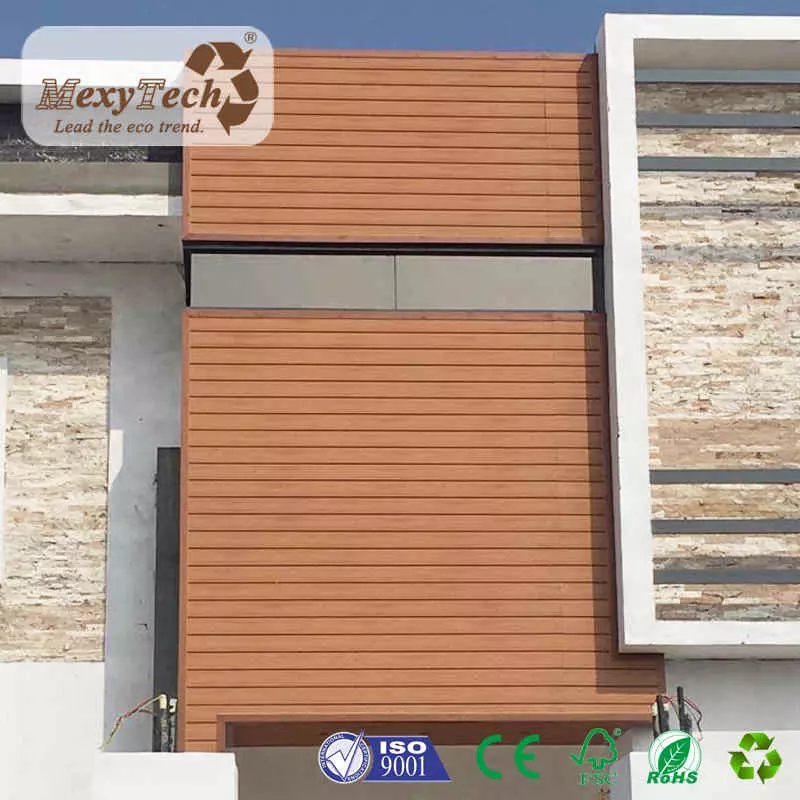
Horizontal cladding boards run parallel to the ground and are one of the most familiar exterior facade styles.
Creates a Wider Appearance
Long horizontal lines naturally draw the eye across the building.
This can make narrow or tall facades appear visually wider and more balanced. It is particularly effective for houses, villas, low-rise buildings, and projects where designers want to emphasize width.
Classic Architectural Style
Horizontal siding has long been associated with traditional timber architecture.
Using WPC allows designers to retain this familiar wood-inspired appearance while introducing the durability and lower maintenance requirements of composite materials.
Works with Different Architectural Materials
Horizontal composite boards can be combined with stone, concrete, brick, glass, metal, and painted walls.
This makes them useful for both complete facades and smaller architectural accent areas.
Vertical Composite Cladding
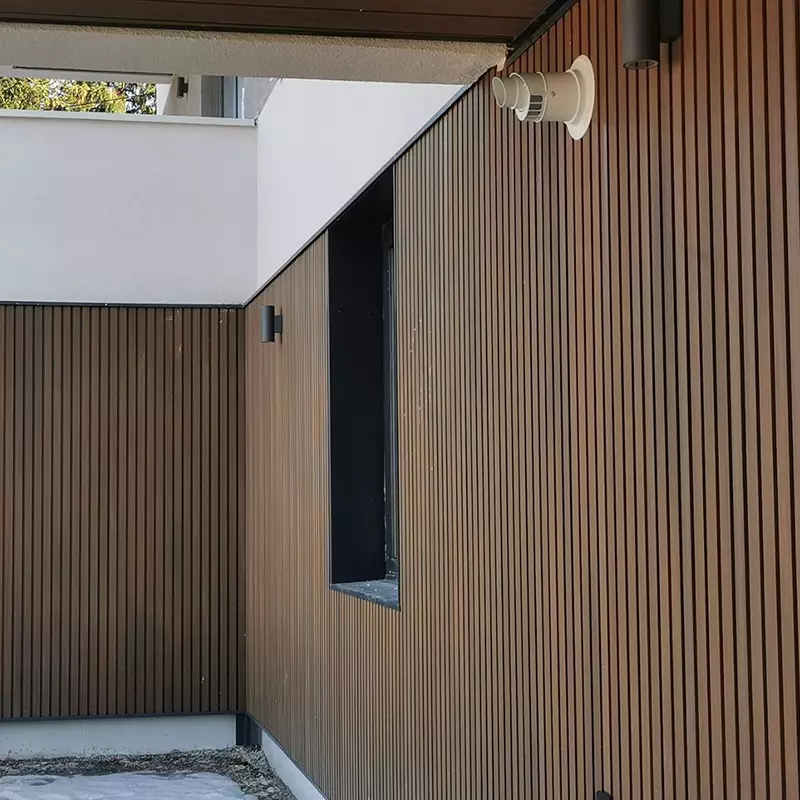
Vertical boards run from top to bottom, creating a very different visual effect.
Makes a Building Appear Taller
Vertical lines naturally direct the eye upward.
This can emphasize the height of a facade and create a taller, more streamlined appearance. It works particularly well around entrances, windows, upper stories, and narrow architectural sections.
Contemporary Appearance
Vertical cladding has become popular in modern residential and commercial architecture because of its clean lines.
Wood-look WPC can soften minimalist architecture by introducing natural warmth without losing the contemporary character of the building.
Ideal for Feature Walls
You do not necessarily need to cover an entire building with vertical cladding.
It can be used selectively for entrance walls, balconies, window surrounds, courtyard walls, exterior columns, or other architectural features.
Can You Combine Horizontal and Vertical Cladding?
Yes—and combining orientations can create an even more distinctive facade.
For example, horizontal boards can be used across the main exterior walls while vertical boards highlight an entrance or upper floor. Designers can also combine different orientations to visually separate architectural volumes.
When mixing orientations, careful detailing at transitions and corners is important for a clean finished appearance.
How to Choose Between Horizontal and Vertical Cladding
Consider the architectural effect you want to achieve.
Choose horizontal composite cladding when you want to emphasize width, create a balanced appearance, or achieve a more traditional wood-siding aesthetic.
Choose vertical composite cladding when you want to emphasize height, create stronger architectural lines, or achieve a contemporary facade.
For more complex projects, combining both orientations can help define different parts of the building.
Horizontal or Vertical? The Choice Is Yours
There is no universal winner in the horizontal vs. vertical composite cladding comparison. Each orientation creates a different architectural effect.
Horizontal boards emphasize width and classic styling, while vertical boards emphasize height and contemporary design. With the appropriate MexyTech WPC cladding system and installation method, either approach can create a distinctive exterior facade.
For cladding profiles, colors, samples, installation information, or project recommendations, contact MexyTech at info@mexytech.com.